Sourdough schedule for a cool kitchen
Last updated
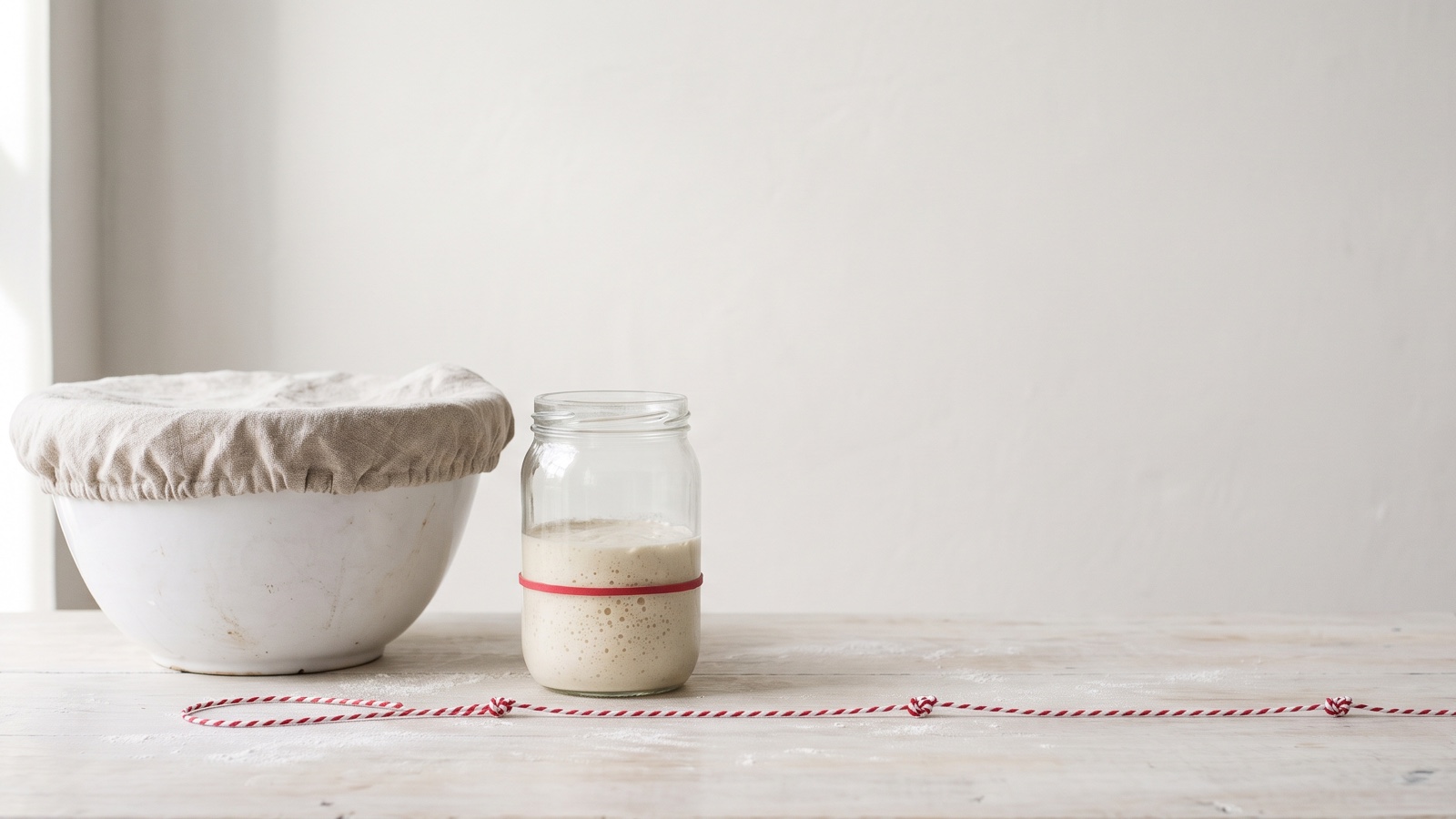
If your kitchen sits below 68°F, sourdough moves slowly, and a recipe written for a warm kitchen will run behind. Below is a sourdough schedule for a cool kitchen: how long the dough is likely to take, two ways to warm it up, how the fridge gives you slack, and a sample bake day. Every time here is an estimate, so start checking the dough at the short end of each range.
How long does bulk take in a cool kitchen?
At about 68°F, The Perfect Loaf puts bulk fermentation at 6 to 8 hours. Below that it takes longer. Our own estimate is roughly 8 to 10 hours at 65°F. That figure is our extrapolation from the published numbers, not a measured one, so treat it as a starting point and check the dough early.
Why temperature sets the pace
The yeast and bacteria in a starter work faster when they are warm and slower when they are cool. The clearest published numbers come from The Perfect Loaf’s article on dough temperature. Its table gives bulk times of about 4 to 4.5 hours for dough at 75°F, and 6 to 8 hours in a cool kitchen of about 68°F.
Between 65°F and 68°F we only have estimates. At 66°F or 67°F, expect something between the two ranges above. That is our estimate too, and the least certain part of our numbers. Below about 65°F, none of the sources we rely on gives a figure, so we don’t put a number on it. Warm the dough instead, as described next.
Warm the dough with the water
The easiest thing to change is the water. Bakers call the temperature they aim for the desired dough temperature. The Perfect Loaf targets a final dough temperature between 75°F and 78°F for most of its recipes, and King Arthur Baking gives 75 to 78°F as the ideal range for wheat breads. We aim for about 76°F.
King Arthur Baking’s desired dough temperature method works out the water temperature from the other temperatures in the bowl. With a levain in the dough you multiply by 4:
water temperature = (target × 4) − (kitchen + flour + levain + friction)
When you mix by hand, The Perfect Loaf sets the friction to 0. Flour and a levain that sat out in the kitchen are about the same temperature as the room. So in a 72°F kitchen:
76 × 4 − (72 + 72 + 72 + 0) = 88°F water
In a 65°F kitchen the same sum asks for 109°F water. That is our arithmetic, and it sits just under The Perfect Loaf’s practical limit: keep mixing water below 110°F, because yeast starts to weaken around 120°F. So in a cool kitchen, warm water gets the dough started but can’t do the whole job, and the dough cools again as it sits. The water goes in at the autolyse, the first time flour and water meet. Treat the result as an estimate: King Arthur Baking calls the friction figure an approximation.
Find a warm spot
The other thing you can change is where the dough sits. Two easy options:
- An oven with only the light on. Leave the oven itself off, and put a thermometer inside before the dough goes in so you know how warm it gets.
- A proofing box, if you have one, set to the mid-70s °F.
The Perfect Loaf’s bulk fermentation guide puts warm fermentation at 78 to 82°F and says not to go above 85°F, so a spot in the mid-70s is plenty. Once the dough sits near 76°F, expect times closer to the 4 to 4.5 hours The Perfect Loaf gives for 75°F dough than to the cool-kitchen range.
A warm spot also decides whether the bake fits your day. The starter build plus a bulk of up to ten hours doesn’t fit into one waking day if you sleep nine hours or more. When that happens at a kitchen temperature below 68°F, Crustworthy offers to plan for a warm spot instead.
Let the fridge give you slack
After shaping, the dough spends the night in the fridge, and this is where a cool-kitchen bake gets its slack back. The Perfect Loaf calls 12 to 16 hours in the fridge the sweet spot and says you can run it to about 24. King Arthur Baking’s schedule gives 8 to 12 hours. A window that wide means a bulk that runs two hours long doesn’t push your bake: you shape later, the dough goes into the fridge later, and you can still bake in the morning.
The dough keeps rising for a while after it goes in the fridge, because it takes hours to cool all the way through. The Sourdough Journey puts it at about 12 hours for dough to cool to 37°F. A fridge that runs warm is a risk too: the same source warns that more than 12 hours above 42°F tends to overproof the dough, so check your fridge with a thermometer once.
A sample sourdough schedule for a cool kitchen
Here is a bake at about 65°F, in the order Crustworthy plans it, for bread at about 10:00 am on a Saturday. The clock times come from our schedule calculator, set to a 65°F kitchen and to sleep hours of 10:30 pm to 7:00 am. They are estimates, and the dough’s signs decide when each step ends.
- Feed the starter, at about 10:15 pm on Thursday. The Perfect Loaf’s levain is ripe in about 5 to 6 hours at 74 to 76°F. In a cool room it is slower: our table puts it nearer 8 hours at 68°F, which is an interpolation. The calculator says to check it from about 5:30 am on Friday and puts its likely peak at about 6:15 am. Use it when it is domed and bubbly.
- Autolyse, at about 7:15 am on Friday. Mix the flour and the warm water until no dry flour is left, cover, and let it rest for about an hour, as in The Perfect Loaf’s recipe.
- Mix, at about 8:15 am. Add the starter and the salt and squeeze them through the dough, about 10 minutes in The Perfect Loaf’s schedule.
- Bulk rise, from about 8:25 am. Roughly 8 to 10 hours at 65°F by our estimate, less in a warm spot. Give it three sets of stretch and folds 30 minutes apart, starting 30 minutes in, as The Perfect Loaf does. In this plan that is about 8:55 am, 9:25 am and 9:55 am. The calculator says to check from about 12:15 pm, gives about 12:35 pm as the likely time, and says the bulk can take until about 6:25 pm.
- Shape, at about 6:25 pm, or earlier if the dough’s signs come earlier. About 45 minutes, including the 25-minute rest after the preshape and the 20-minute rest after shaping that The Perfect Loaf’s recipe gives.
- Into the fridge overnight, at about 7:10 pm. About 14 hours in this plan, inside the 8 to 24 hours that King Arthur Baking and The Perfect Loaf allow between them.
- Preheat, at about 8:10 am on Saturday. About an hour, with the oven at 450°F, as in The Perfect Loaf’s recipe.
- Bake, at about 9:10 am. About 50 minutes, as The Perfect Loaf bakes it: 20 with the lid on, then about 30 with it off, so the lid comes off at about 9:30 am.
Step 4 has an early time and a late one because of what the calculator assumes. It assumes the dough is at about 76°F, the temperature the warm water above aims for, so it has you start checking a little under 4 hours in. Our 8 to 10 hours is for dough that sits at 65°F, and dough in a cool room cools toward that as it sits. So the calculator also keeps the day free until about 6:25 pm, 10 hours after the bulk starts, and plans the shaping for then.
Add up steps 1 to 4 and you can see why a cool kitchen needs a plan. Most of that wait is hands-off, and the fridge absorbs a late finish.
What to look for instead of the clock
A schedule tells you when to start looking, and the dough tells you when it is done. At the end of bulk, look for a rise of about 30 to 50%, a domed top, bubbles at the edges and a jiggle when you shake the container. Our guide on how to know when bulk fermentation is done goes through each sign. If you’re not sure, give it 15 to 30 minutes and look again, as The Perfect Loaf advises.
If you’re choosing an app to plan bakes like this for you, our comparison of sourdough apps sets ten other apps beside ours, and says where another one is the better choice.
Want times for your own kitchen? Try the free schedule calculator.
Sources
- The Perfect Loaf: The Importance of Dough Temperature in Baking
- The Perfect Loaf: Beginner's Sourdough Bread
- The Perfect Loaf: The Ultimate Guide to Bread Dough Bulk Fermentation
- King Arthur Baking: Desired dough temperature
- King Arthur Baking: Sourdough schedule, how to plan your bread baking timeline
- The Sourdough Journey: The Mystery of Percentage Rise in Bulk Fermentation
Crustworthy: Sourdough Planner
Coming to the App Store in December 2026.
14-day free trial, then $39.99 a year. Also $9.99 a month, $4.99 a week, or $79.99 once.
The app has no free tier. The calculator and guides on this site are free.